

The Barbara Perkins and George Perkins Prize
Established in 1994, the Perkins Prize honors Barbara Perkins and George Perkins, the founders of both The Journal of Narrative Technique and the Society itself. The prize, awarded to the book making the most significant contribution to the study of narrative in a given year, provides $1,000 plus a contribution of $500 toward the winning author’s expenses for attending the Narrative Conference at which the award will be presented.
The Perkins Prize is awarded to the most significant contribution to the study of narrative within a given year. It is conceived as a book prize rather than an author prize. All books on the topic of narrative, whether monographs, edited collections, or collaboratively written books, are eligible to compete. If an edited collection or collaboratively written book is selected, the prize goes to the editor(s) or the collaborators.
CALL FOR SUBMISSIONS: 2027 AWARD
The International Society for the Study of Narrative is pleased to invite submissions for its annual book prize.
The winner will be announced on this listserv by the end of the calendar year, with the prize officially awarded at the 2027 ISSN conference. Winners will receive a plaque, $1000 (USD), and $500 (USD) towards their travel expenses if they attend the conference.
To be eligible for this year's prize, books must have a copyright date of 2025. Nominations may come from publishers, authors, or editors (in the case of an edited volume). Self-nominations are perfectly acceptable.
Please send (or have the publisher send) a PDF copy to each of the three judges (email addresses linked in the names below) by July 1, 2026. Hard copies would be appreciated in addition to the PDF (mailing addresses below).
Judges:
2026 Perkins Prize Winner
Alexander Manshel, Writing Backwards: Historical Fiction and the Reshaping of the American Canon
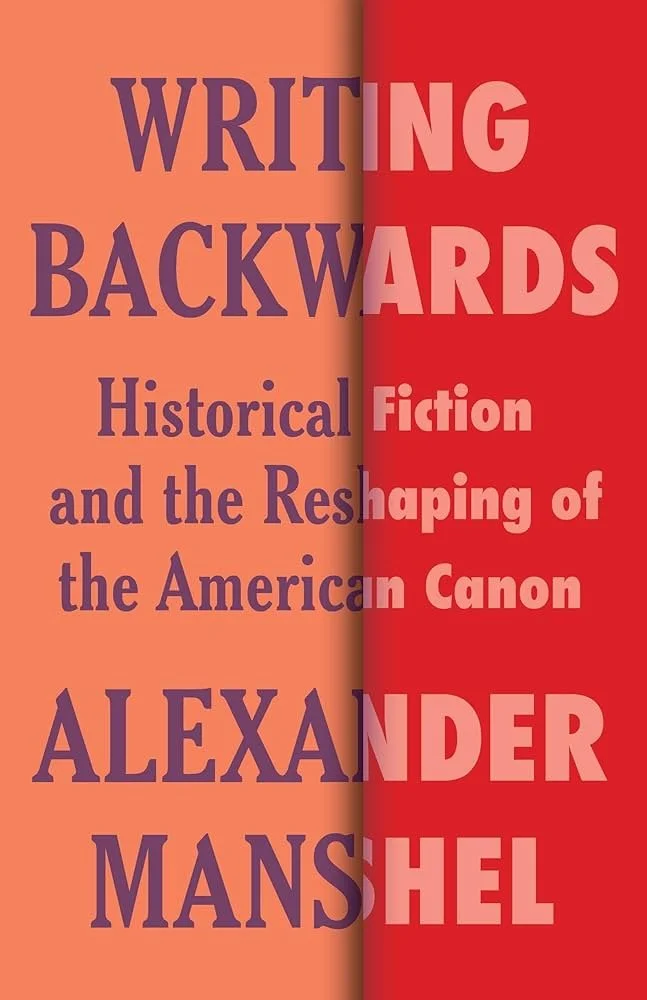
Alexander Manshel’s Writing Backwards: Historical Fiction and the Reshaping of the American Canon (Columbia UP, 2024) offers a striking example of the power that cultural history can lend to narrative studies, and vice-versa. Manshel’s truly illuminating innovation is to take an idea that has long been current in literary studies—that the values and ideologies reflected in literature are historical phenomena—and apply it specifically to the question of literary form. In doing so, Manshel helps establish a kind of historical narratology as a viable alternative to both the specificity of close reading and the abstraction of more distant or digital methods. Rather than seeing genres as more or less timeless conventions, Manshel shows how the question of narrative form is inevitably connected to a complex and changing interplay of historical contexts: prizes, publishers, syllabi, and academic trends and debates. At the center of this project is a fascinating story about how one particular type of narrative, historical fiction by minority writers, became “contemporary literature’s most prestigious and politically potent genre” in the past five decades. But the thrill of this study is methodological, showing us how we might go about determining when and why certain narrative forms, techniques, and genres acquire cultural salience or value amidst larger historical currents. In further opening the connection between literary form and literary history Manshel’s study offers not only innovative readings of individual texts but a brilliant account of how (and what, and why) we read now.
HONORABLE MENTION: The View from Above in American Literature: Aerial Description, the Imaginary, and the Form of Environment (U of Edinburgh Press, 2024)
In this stunningly original book, David Rodriguez asks us to reconsider our assumptions about the connections between form and politics, narrative and power. Novelistic narration—especially in its third-person, “omniscient” modes—has been linked to the panoptic power of the modern state. Rodriguez suggests that there is nothing necessary about this connection: that literary images—in particular, descriptions of the land from elevated or aerial locations—can allow a “form of environment” to emerge: one that blurs, bewilders, and disorients the viewer or reader, thus ultimately allowing us to realize that our true relation to the environment is not one of mastery and distance but of entanglement. Instead of a positivist conception of the environment or one centered on ideas of dominance and representational control, the “form of environment” as theorized by Rodriguez is a more potential, less determinate force. It tends to work through negation, distortion, and interference, at a level between narrative and description. Unlike visual representations, fictional narratives allow us to intuit this form or force. They can do so because they bypass visual perception and engage directly with imagination, allowing us “to encounter what is not seen in the view from above.” Challenging anthropomorphic versions of narrative theory, Rodriguez’s book offers a brilliant dialectical understanding of focalization in narrative, locating its most valuable affordance not in the capacities but in the limitations of human perception.
Past Prize Winners
2025
Katherine D. Johnston, Profiles and Plotlines: Data Surveillance in Twenty-First Century Literature (U of Iowa P, 2023)
2024
Marco Caracciolo, Slow Narrative and Nonhuman Materialities (Lincoln: University of Nebraska Press, 2022)
Honorable Mention: Peter Friederici, Beyond Climate Breakdown: Envisioning New Stories of Radical Hope (MIT Press, 2022)
2023
Carolin Gebauer, Making Time: World Construction in the Present-Tense Novel (Berlin: De Gruyter, 2021)
2022
Natalya Bekhta We-Narratives: Collective Storytelling in Contemporary Fiction (Columbus: The Ohio State University Press, 2020)
2021
Yogita Goyal, Runaway Genres: The Global Afterlives of Slavery (New York: NYU Press, 2019)
2020
Ruth Page, Narratives Online: Shared Stories on Social Media (Cambridge: Cambridge University Press, 2018
2019
Rita Charon et al., The Principles and Practice of Narrative Medicine (New York: Oxford University Press, 2017).
Honorable Mention: Christopher González, Permissible Narratives: The Promise of Latino/a Literature (Columbus, OH: The Ohio State University Press, 2017).
2018
Kent Puckett, Narrative Theory: A Critical Introduction (Cambridge, UK: Cambridge UP, 2016).
2017
Erin James, The Storyworld Accord: Econarratology and Postcolonial Narratives (Lincoln and London: University of Nebraska Press, 2015).
Honorable Mention: Robyn Warhol and Susan S. Lanser (eds.), Narrative Theory Unbound: Queer and Feminist Interventions (Columbus: The Ohio State University Press, 2015).
2016
Liesbeth Korthals Altes, Ethos and Narrative Interpretation: The Negotiation of Values in Fiction (Lincoln, NE: U of Nebraska P 2014).
Honorable Mention: Marco Caracciolo, The Experientiality of Narrative: An Enactivist Approach (2014).
2015
Thomas Pavel, University of Chicago, The Lives of the Novel: A History (Princeton, NJ: Princeton UP 2013)
Honorable Mention: Daniel Stein and Jan-Noël Thon, From Comic Strips to Graphic Novels (de Gruyter, 2013)
2014
Srinivas Aravamudan, Enlightenment Orientalism: Resisting the Rise of the Novel (Chicago, IL: U of Chicago P, 2012).
2013
Edward Adams, Liberal Epic: The Victorian Practice of History from Gibbon to Churchill (Charlotte, VA: U of Virginia P, 2011).
Honorable Mention: Jonathan Lamb, The Things Things Say (Princeton: Princeton UP, 2011)
2012
Margaret Cohen, The Novel and the Sea (Princeton: Princeton UP, 2010).
Honorable Mention: Jesse Molesworth, Chance and the Eighteenth-Century Novel (Cambridge: Cambridge UP, 2010).
2011
Garrett Stewart, Novel Violence: A Narratography of Victorian Fiction (Chicago: U of chicago Press, 2009).
Honorable Mention: Jennifer Wenzel, Bulletproof: Afterlives of Anticolonial Prophecy in South Africa and Beyond (Chicago: U of chicago Press, 2009).
2010
Hilary Dannenberg, Coincidence and Counterfactuality: Plotting Time and Space in Narrative Fiction(University of Nebraska Press).
2009
Sharon Marcus, Between Women: Friendship, Desire, and Marriage in Victorian England (Princeton UP, 2007).
2008
Brian Richardson, Unnatural Voices: Extreme Narration in Modern and Contemporary Fiction (Ohio State UP, 2006).
2007
James Phelan, Living To Tell About It: A Rhetoric And Ethics Of Character Narration (Cornell UP, 2005).
Honorable Mention: A.C. Spearing, Textual Subjectivity (Oxford, 2005).
2006
Marianne DeKoven, Utopia Limited: The Sixties and the Emergence of the Postmodern (Duke University Press, 2004).
Alan Palmer, Fictional Minds (University of Nebraska Press, 2004).
2005
Caroline Levine, The Serious Pleasures of Suspense: Victorian Realism and Narrative Doubt (University Press of Virginia, 2003).
2004
David Herman, Story Logic: Problems and Possibilities of Narrative (Lincoln: University of Nebraska Press, 2002)
Jorgen Dines Johansen, Literary Discourse: A Semiotic-Pragmatic Approach to Literature (Toronto: University of Toronto Press, 2002).
2003
Amy Elias, Sublime Desire: History and Post-1960s Fiction (Baltimore: Johns Hopkins University Press, 2001)
Michael Whitmore, Culture of Accidents: Unexpected Knowledges in Early Modern England (Stanford University Press, 2001)
2002
Patricia Yaeger, Dirt and Desire: Reconstructing Southern Women's Writing, 1930-1990 (Chicago: University of Chicago Press, 2000)
Honorable Mention: Marie-Laure Ryan, Narrative As Virtual Reality: Immersion and Interactivity in Literature and Electronic Media (Baltimore: Johns Hopkins University Press, 2000)
2001
Robert L.Caserio, The Novel in England, 1900-1950: History and Theory (Twayne Publishers, 1999)
Eileen Gillooly, Smile of Discontent: Humor, Gender, and Nineteenth-Century British Fiction (Chicago: University of Chicago Press, 1999)
2000
Susan Stanford Friedman, Mappings: Feminism and the Cultural Geographies of Encounter (Princeton: Princeton University Press, 1998)
Dorothy J. Hale, Social formalism: The Novel in Theory from Henry James to the Present (Stanford University Press, 1998)
Honorable Mentions
Kali Israel, Names and Stories: Emilia Dilke and Victorian Culture (New York: Oxford Univ Press, 1998)
Elizabeth Bronfen, The Knotted Subject: Hysteria and Its Discontents (Princeton, NJ: Princeton University Press, 1998)
Susan Slyomovics, The Object of Memory: Arab and Jew Narrate the Palestinian Village (University of Pennsylvania Press, 1998
1999
Joseph Litvak, Strange Gourmets: Sophistication, Theory, and the Novel (Durham, NC: Duke University Press, 1997)
1998
Judith Roof, Come As You Are (Columbia University Press, 1996)
Monika Fludernik, Towards a 'Natural' Narratology (Routledge, 1996)
1997
Adam Zachary Newton, Narrative Ethics (Harvard University Press, 1995)
1996
Laura Doyle, Bordering on the Body: The Racial Matrix of Modern Fiction and Culture (Oxford University Press, 1994)